Key Takeaways
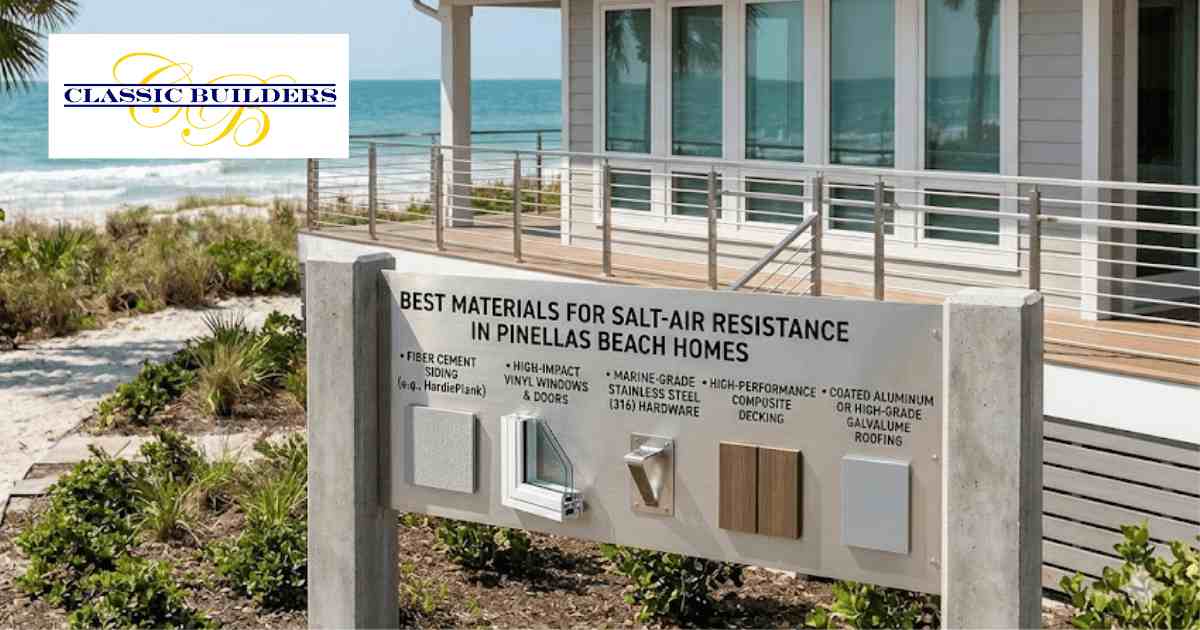
Waterfront homes in Pinellas County require marine-grade building materials to combat constant salt spray and humidity. Use 316-grade stainless steel for hardware, fiber cement siding for exteriors, and vinyl-framed impact-rated windows to prevent pitting and rot.
High-build acrylic finishes and powder-coated aluminum provide the best protection against corrosion and UV damage in high-exposure areas like St. Pete Beach.
__________________________________________________________________________________________________
Selecting the right salt-air-resistant building materials for coastal homes is the most important decision for a waterfront project. Salt air damages standard products within months. It causes metal to pit and wood to rot. Choosing materials rated for specific coastal conditions protects your investment for the long term.
This guide explains the hardware, finishes, and structural components needed for a stable home on the Gulf.
What are the best exterior siding options for salt-air resistance?
Fiber cement siding is the top choice for the coastal region. It consists of cement, sand, and cellulose fibers. This mix creates a board that does not rot, warp, or succumb to wood-boring insects.
Unlike natural wood, fiber cement does not absorb moisture. This is a single challenge that beach homeowners face daily.
Standard wood siding requires constant scraping and painting. In the humidity of St. Pete or Clearwater Beach, wood expands and contracts. This movement breaks the paint bond.
Fiber cement stays stable. It provides the look of colonial living without the heavy maintenance. It also carries a high fire rating, which is an added benefit for densely packed coastal lots.
Which windows perform best in high-exposure waterfront environments?
The best impact-rated windows for salt air feature vinyl or fiberglass frames rather than standard aluminum. While aluminum is strong, the salt air in Tampa Bay causes it to oxidize. Even high-quality powder coatings can fail over time if they are scratched. Once the raw aluminum is exposed, the corrosion spreads under the finish.
Vinyl and fiberglass are entirely inert. They do not react to salt or moisture. For a dream home on the water, these materials provide better thermal performance and longevity. The glass itself must be impact-resistant.
This is required by Pinellas County building codes. These windows use a laminated interlayer that keeps the glass together if it is hit by debris during a storm. This layer also blocks nearly all UV rays, which protects your furniture and flooring from fading.
How do you prevent metal corrosion in Tampa Bay coastal climates?
To prevent rust, you must use corrosion-resistant home hardware in Florida standards. This primarily means using 316-grade stainless steel. There is a major difference between 304 and 316 stainless steel. 304 is common in kitchens. However, 316 contains molybdenum. This extra element makes it resistant to the chlorides found in sea salt.
If you use standard steel or lower-grade stainless, you will see tea-staining within a single season. This looks like brown streaks running down your white trim or doors.
We recommend 316-grade for every screw, hinge, and bracket on the exterior of the home. For railings and gates, powder-coated aluminum is the standard. The coating must be applied to a high standard to prevent bubbling near the Gulf.
What are the best coastal-grade paint finishes for Pinellas County?
Standard exterior paint will not survive a decade on the Gulf Coast. The combination of intense UV rays and salt creates a sandpaper effect on your walls. Coastal-grade paint finishes for Pinellas County use high-build acrylic resins. These paints are thicker and more flexible than standard options.
We recommend finishes with high-quality color coatings like Kynar 500 for metal components. These coatings keep their color and gloss even under constant exposure to salt. For stucco or siding, look for paints that are “breathable.”
They allow fat and moisture to escape from the substrate without causing the paint to peel. This is a common issue in humid coastal climates.
Why is a single source of responsibility necessary for material selection?
Building a home involves hundreds of small choices. Usually, a homeowner hires an architect, then an engineer, and finally a builder.
This creates a gap in communication. An architect might specify a beautiful door that lacks the hardware needed for a high-exposure waterfront home maintenance schedule in St. Pete Beach. If the builder simply follows the plan, the door will fail.
Using a single team to manage the architects, engineers, and surveyors removes this risk. One group oversees the entire material selection process. They check the engineering requirements against the architectural design. They make sure the surveyors have accounted for the exact elevation needed to meet FEMA rules.
This integration prevents expensive mistakes. It ensures that every material used is compatible with the coastal conditions of your specific lot.
How to manage high-exposure waterfront home maintenance in St. Pete Beach?
Even with the best marine-grade building materials Tampa Bay has to offer, maintenance is required. A “stable home” on the water needs a regular rinsing schedule. You should wash down your windows, doors, and siding with fresh water at least once a month.
This removes the salt crystals before they can sit and bake in the sun.
Focus on the “hidden” areas. Salt collects under porch ceilings and in door tracks where rain cannot reach it. These are the spots where corrosion usually starts.
If you select the right materials during the building process, this maintenance is fast and easy. It becomes a simple rinse rather than a heavy repair job.
FAQs
Does 316 stainless steel ever rust?
While it is highly resistant, it can still develop surface spots if salt is left to sit on it for years. Regular cleaning with fresh water keeps it looking new. It is the highest standard for residential coastal hardware.
Are vinyl windows strong enough for hurricane winds?
Yes. Modern vinyl frames are reinforced with steel or aluminum internal chambers. They meet the same impact and wind-load requirements as metal frames but offer better salt resistance and insulation.
Why is powder coating better than liquid paint for metal?
Powder coating is a dry process that is baked onto the metal. This creates a much harder and thicker barrier than liquid paint. It is less likely to chip or scratch, which is the main way corrosion starts on metal surfaces.
Do I need a soil test before choosing my foundation materials?
Always. A soil test tells the engineer how deep the pilings or footings must go. On the Pinellas Beaches, the soil is often sandy and unstable. The right test determines if you need concrete, steel, or composite materials for your foundation.
Is fiber cement heavy?
It is heavier than wood or vinyl. This requires a professional crew to install it correctly. However, that weight contributes to the durability and sound-dampening qualities of the home.
Build Your Forever Home with Confidence
Managing a coastal build is a full-time job. Classic Builders takes that burden off your shoulders. With over 25 years of experience in Pinellas and South Tampa, we provide a “Concept to Completion” concierge service. We handle the architects, engineers, surveyors, and soil tests so you don’t have to.
We specialize in building homes that stand up to the Gulf Coast environment without the stress of traditional construction.
We offer a no-cost initial consultation and feasibility study to help you understand what is possible for your property.
Contact us today to start your project with a team that knows the coast.